
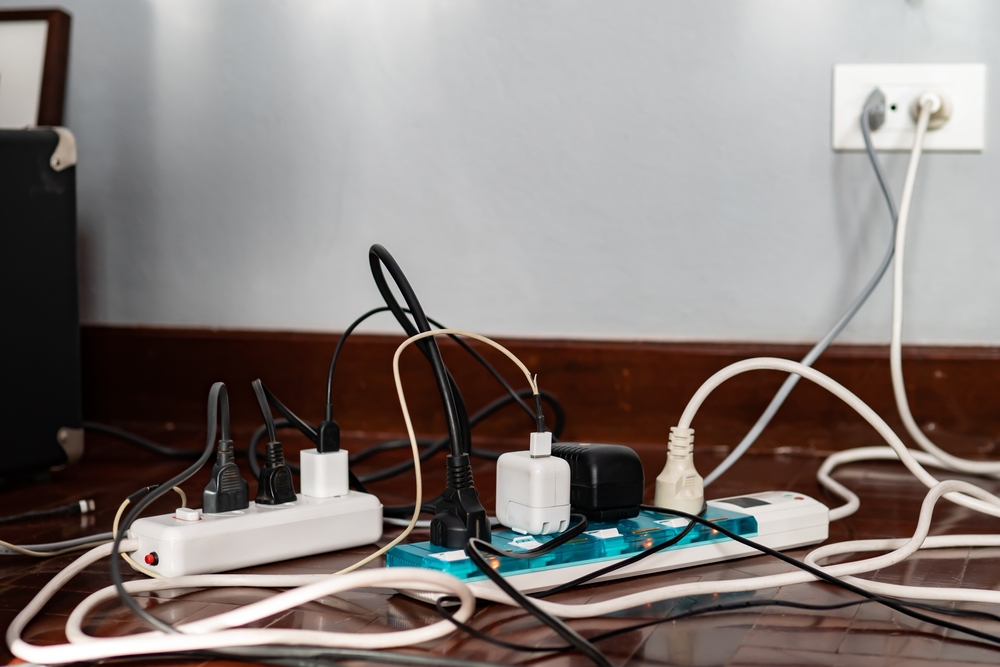
It is incredibly easy for households to overload their electrical outlets without even realizing it. You might start by plugging in a lamp, then a charger, and before you know it, that single wall outlet has become a chaotic spiderweb of plugs and adapters.
Plugging too many devices into a single outlet or daisy-chaining multiple power strips together can overwhelm your electrical system and create dangerous conditions behind the scenes. Specifically, overloaded outlets can lead to overheating, damaged wiring, tripped breakers, sparks, and even electrical fires if the warning signs are ignored.
The good news is that these electrical hazards are often preventable with the right upgrades, inspections, and safe electrical practices. Curtis Total Service is here to help homeowners throughout the Lehigh Valley keep their electrical systems safe, efficient, and up to code.
Why Extension Cords Shouldn’t Be Permanent Solutions
Extension cords are designed to provide temporary power in situations where an outlet isn’t conveniently located. However, many homeowners begin using them as long-term solutions because it seems easier and more affordable than installing additional outlets. Over time, this habit can become dangerous.
The Risk of Overheating
One of the biggest issues with permanent extension cord use is overheating. Extension cords are not built to handle continuous electrical loads for long periods, especially when powering high-demand appliances like microwaves, refrigerators, air conditioners, or space heaters. As electricity flows through the cord for extended periods, heat can build up and damage the cord’s insulation, increasing the risk of electrical fires.
The Risk of Wear and Tear
Extension cords placed under rugs, behind furniture, or across walkways are more likely to become damaged. Pinched cords, exposed wires, or cracked insulation can all create shock hazards and fire risks. Unfortunately, many homeowners continue using damaged cords without realizing how dangerous they have become.
The Risk of Daisy-Chaining Extension Cords
Plugging one extension cord into another may seem harmless, but it can significantly increase resistance and heat buildup. This practice can overload circuits and strain your electrical system, especially when several devices are connected at once.
The Fire Risks Associated With Overloaded Circuits
Every electrical circuit in your home is designed to handle a specific amount of electricity (measured in Amps). When you plug too many devices into a single outlet or daisy-chain multiple power strips together, you demand more electricity than the wires can safely provide. This excess demand causes the copper wiring to heat up.
Under normal circumstances, your circuit breaker should trip to cut off the power and prevent a fire. However, in older homes or systems that haven’t been maintained, the breaker may fail to trip, or the heat may build up so rapidly at the outlet itself that the plastic casing begins to melt.
Once the insulation around the wires is compromised, arcing can occur. This is when electricity jumps across a gap, creating a spark that can reach temperatures of thousands of degrees. If this happens inside a wall near wooden studs or insulation, a fire can spread rapidly before you even smell smoke.
According to the National Fire Protection Association (NFPA), faulty electrical distribution and lighting equipment are leading causes of home fires, and a significant portion of these involve overloaded circuits and extension cord misuse.
Safe Alternatives for Powering Your Home’s Devices
Rather than relying on a tangled mess of cords, consider these alternatives to meeting your home’s daily power needs:
- Install Additional Outlets: If you find yourself reaching for an extension cord every time you buy a new device, it’s a sign that your home’s original design no longer meets your needs. An electrician can install new outlets exactly where you need them, reducing the need for cords.
- Invest in Dedicated Circuits: High-draw appliances like microwaves, space heaters, and sump pumps should have their own dedicated circuits. This ensures they have a direct line to the electrical panel without competing with other devices, preventing overloads.
- Perform Panel Upgrades: If your home still uses an old fuse box or a low-amperage electrical panel, it may be time for an upgrade. Modern panels are designed to handle the load of today’s technology and include advanced safety features like AFCI (Arc Fault Circuit Interrupter) breakers.
- Use Smart Power Strips (When Needed): If you must use a power strip for low-voltage electronics (like a computer and monitor), choose one with built-in surge protection and an internal circuit breaker that will shut off automatically if it becomes overloaded.
Routine electrical inspections are also incredibly valuable. A qualified electrician can identify outdated wiring, overloaded circuits, damaged outlets, and other hidden hazards before they become serious problems.
Protect Your Home From Electrical Hazards
Have you noticed flickering lights when you turn on a vacuum, outlets that feel warm to the touch, or breakers that trip every time you use the toaster? Perhaps you’ve realized that your living room is currently a maze of extension cords that have been plugged in for months.
Don’t wait for any of these problems to turn into a dangerous emergency. Turn to Curtis Total Service for trusted electrical repairs and professional upgrades. Our team will assess your home’s current capacity, identify hidden risks, and provide permanent solutions that keep your family safe. Contact us today to schedule your electrical service!